

“The arts, storytelling, it’s a confrontation with the wrongs of the world.”: Richard Greene releases Cannibal Rats
June 2026
Congratulations on your new poetry collection – I found it an intimate and rich read. And the arrangement of poems feels very elegant.
I had a good editor, Michael Prior, and this is humbling, he was actually my graduate student 10 years ago.
So he said stuff to me like, Rick, remember what you used to tell us? And, of course, then I feel very sheepish and stupid. I wanted the book to start in Newfoundland, to establish the place at the beginning. And then in the last part would be the long poem, The Reenactors. And also, given that there’s a certain formality in the book, a number of the poems are rhymed, I wanted to intersperse some unrhymed poems among them, some free verse poems. The last thing to go in was a poem about Texas, which I found at the last minute. I had written it years and years ago. A sort of a sad poem, I think, it’s sort of a divorce poem. And I just pushed it away because it was gloomy. When I went back to it, I kind of liked it, and so that was the very last thing to go in, popped in after the opening Newfoundland section.
I found it’s so interesting that you could do travelogue so well, and also very personal family stuff so well.
Well, thank you for that. I’m not prolific, so this is the first book of poems that I’ve done since 2013. Some of them are not particularly new, like there’s that Texas poem I mentioned, from around 2015, 2016. There’s an earlier one in there on the use of the sextant. I feel very, very lucky when I see a subject that I can work on in a way that’s like a memoir or a travelogue. A friend of mine, a Welsh poet named Gwyneth Lewis, described the long Reenactors at the end as a road novel. It kind of is, except that almost everything happened. What didn’t happen was I changed one or two items of chronology, and I think I changed the speech in one instance, because I was doing a rhyme. So, it’s very lightly fictionalized. But when I could see that pattern, that I was driving, then that allowed me a sort of a structure on which to hang the individual poems. The long poem about my mother, the one called Thole, it took a long time to write, maybe a year. My mother was a difficult, interesting woman, troubled, and, you know, she had the benefit of the horrible mental health services of the 1970s. So, things that might have been improvable were not helped at the time. And that made life hard for her and hard for us. At the same time, it fit into the context of Snowmageddon, she died right at the end of Snowmageddon, like the last day or a day or two after. Noreen, my sister, and Alana, my other sister, contacted me, and so I got home on one of the first flights to get into St John’s, and all this snow just seemed like a mammoth metaphor. Like James Joyce in The Dead, which ends with this big rhapsody on snow. So I was going through present tense experiences, being in St John’s, but also a St John’s from which many people I cared about were missing. (John Carter gets a look in there.) But also, my own state is as a person who’s moved away. Now, Thole was written before I decided to reestablish a home in St John’s. I had wanted to do it for a long time, and in a way, it pushed me towards it. The idea of being … of being so attached to the place, and yet being also a stranger, didn’t sit well with me. It took many months to write, and the long poem that follows, about the drive through the States, and up through Gros Morne, and so on, that took quite a while to do, well over a year. And indeed, I thought that that poem was finished, I got through Gros Morne feeling a bit better than I did when I started. We’re good. And then it became much more likely that Trump was going to do it, that Trump was going to get back in. And I felt I had to go back to it. I had made another journey into the States, and I had the material on hand, so I took it up again, and wrote an angrier, more explicit ending to the travelogue.
I guess all poetry is kind of a process of distillation anyway. You want to get fewer and fewer words that say more and more.
I love that.
I just stole that from Q so you can steal it from me. Do you work on the poems every day? What’s your process there?
It gives me joy every day that I can sit down and write something. Right now, I haven’t got something, and I’m going around looking and wanting to find a subject to write about. But when I had those sequences of poems, I’d like to get all the time I could to work on them. I have notebooks from those travels, and of course, with my mother, it’s just excavating my own memories. The poem about my mother was harder to write than the one in the States, and was more broken up. Some days when things were going well, on the travel poem, I was able to get maybe 10 to 12 lines written and I’d be delighted. Other days I had nothing to show for [the time], but I spent a lot of time cleaning up something that was almost there, but not right. I like writing, like being able to get it down and look at it. And when I don’t have something [in process], I’m moody.
When a poem starts to come to you, does it come as free verse versus rhyme? Do you know right away what kind of format you want to pursue?
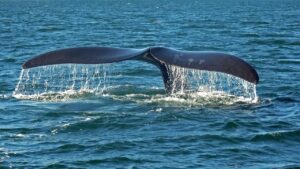
That’s actually a good question. I don’t know exactly how it was that so much rhyme came into this volume]. I tended to go for 10-syllable lines; my previous book [Dante’s House] was actually in terza rima, Dante’s form. And that seemed a logical thing to attempt, because the poems were largely set in Italy, and had a lot of historical stuff in it, and also contemporary politics of Italy. And my own personal story. So I did that. I like the form of the poem to have something to do with what it’s saying. And so, at the beginning The Reenactors, the speaker says, What I’d give for a sense of proportion! That wasn’t the first section written, the first section was actually the one about the whales going asleep with half their brain shut off. I thought that was kind of fun, those silly whales.
It was, in some ways, a messy kind of poetry to write, going from place to place. It’s episodic. There’s some personal details about health, and social and political observation. And so it pulled the thing together. I’ll tell you one reason why I did emphasize rhyme and regular line length in this book, is that I wanted to situate it very close to the world of folk songs and the blues. And the reason for that is that if we live in a time when political life is failing us, really badly, where else can we find a way to enhance the human? That’s kind of what the title poem is on about. [Newfoundlanders] used folk songs to address real horrible hardships, like shipwrecks, and there’s still a lot of people that in St John’s and all around the island and Labrador having a hard, hard time, but a 100 years ago, poverty was wall-to-wall, and infant mortality, death in childbirth, and ships sinking all the time. And so we had folk songs to confront that. And we had stories to confront that. We had people singing, and telling their tales. With the blues, and it’s a strict tradition, coming out of the south, it’s not just comfort, it’s also a confrontation with segregation, and Jim Crow. And I think that music, the arts, storytelling, it’s a confrontation with the wrongs of the world. It’s not going to fix everything. But it’s a good thing to do. So I wanted to situate the poems in that world, alongside the folk song tradition and the blues.
And what about the decision for the title of the book?
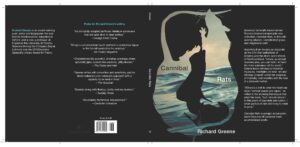
I almost changed that at the last minute. The title of the book was very provocative, and in a way, kind of silly. The title drew attention to that first poem, which raises this problem: how do I relate to my own culture? Because I’ve been away so much. But the title could have been changed at the last minute to The Reenactors. We asked around and the opinion was, no, be provocative, be a bit funny. Be snarky. Let it go. And so I went with it. The idea of the cannibal rats has another kind of dimension for me, in that I worry about human appetites. You know, it’s like sometimes we are devouring one another. And what can we do about that? I actually hope that the book has certain points of optimism. Are there things worth doing? And, you know, life is well worth living. So a lot of hemming and hawing over the title. The publishers really wanted the title, and so I ran with it. The cover was done by a very competent cover designer named David Drummond. I was pleased with it.
When we started talking, you said your editor, who was a former student, said, remember what you always said to us. What would you always say to them?
That’s a good question. I’m trying to remember what it was that he caught me doing, that I was trying to knock out of the students, It was something to do with economy, and I was slipping things in that really should be cut out. I think it was along those lines and he was holding me to account. He really was a very good student.
Cannibal Rats is published by Véhicle Press.
Author photo: Linda Kooluris Dobbs.