

Tara Bryan 1953-2020
February 2022
Tara Bryan was a prominent, popular, and prolific visual artist and book designer whose death in September 2020 was a true loss for the arts community here and beyond. Today and for the next few posts we’ll celebrate some of her wonderful artworks and share some of her story.
Tara Tidwell Bryan was born in Cuero, Texas on October 14, 1953. An award winning book artist, painter and teacher, she influenced many in the book arts community in Newfoundland and across North America. She collaborated with artists and writers in the province and across North America including Diana Dabinett, Luben Boykov, Eleana Popova, Kevin Major, Anne Meredith Barry, and many others. Tara’s volunteer and community work included being on the boards of Eastern Edge Gallery, VANL-CARFAC, and the Arts and Letters Committee. She generously shared her knowledge and her incomparable skills in book design and painting and was a mentor to many through her teaching and workshops. Her paintings have been included in numerous exhibitions across Canada, the USA and abroad and the Christina Parker Gallery has exhibited her work since 1989 in many solo, two person and group exhibitions with the gallery.
Her honours include being elected into the Royal Canadian Academy of the Arts for Book Design (2012) and the Long Haul Award (VANL) 2010. One of her iconic paintings, Aftermath (Cracking up), was selected as the image for permanent placement on the exterior facade of the St John’s Convention Centre, and in 2018 The Alcuin Society honoured Tara Bryan with an award for book design for Facades for Mark Rothko, text by Crispin Elsted.
From https://tarabryan.com, reporting Bryan being award VANL’s 2021 Endurance Award.
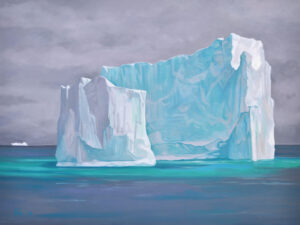
Images: From Collenette’s (oil on linen, 2013, 24 x 60), Leaving Ilulisset (oil on line, 36 x 48, 2017), courtesy Christina Parker Gallery.